Skip to content

Discover what Louisiana has always known: Red Beans and Rice
is more than a dish.

Follow the trail to find this beloved classic prepared with heart, soul, and tradition. Click the to discover the Trail Champions.

Read More
Illustrated map of Louisiana with Trail Champion locations

Sponsored by trusted Louisiana brands

Louisiana invented Red Beans and Rice. Camellia Beans and Cajun Country Rice perfected it. The Red Beans and Rice Trail leads you to the state’s best plates, selected as 2026 Trail Champions.

From truck stops to fourth-generation diners, discover 20 authentic Louisiana stops beginning at Beanlandia, in the heart of the Marigny-Bywater neighborhood of New Orleans. Each has been tasted and vetted in person for flavor, tradition, and craft.

Red beans and rice took root in 19th-century New Orleans, shaped by West African rice-growing knowledge, Haitian migration, and Creole cooks. Its first written recipe appeared in The Picayune’s Creole Cookbook in 1900. Ever since, it has been Monday supper — the pot that simmered while the wash got done.

Food writer Pableaux Johnson carried the tradition forward through the Camellia Red Beans Road Show. For more than a decade, one pot traveled from New Orleans to cities nationwide, gathering chefs and communities around a shared table. The rule never changed: this is a recipe passed hand to hand.

Red beans and rice is one of America’s most recognized dishes: Monday’s ritual, Louis Armstrong’s favorite sign-off, and a meal embraced from humble kitchens to white-tablecloth restaurants. Born from practicality and sustained by devotion, no other dish tells Louisiana’s story quite like it.

Established in September 2026 by two Louisiana originals — fourth-generation Camellia Beans and third-generation Cajun Country Rice — the Red Beans and Rice Trail carries that tradition forward. Each annual Trail Champion honor recognizes a Louisiana restaurant, truck stop, or market where generational cooks and chefs keep a family-rooted version of the dish alive and ready to pass on.

The Trail begins at Beanlandia on the former grounds of the Touro Almshouse, where 1,800 men joined the Native Guard in 1862 and became the Union Army’s first soldiers of color. They fought at Port Hudson, and survivors helped shape democracy during Reconstruction. Beginning here reflects the Trail’s purpose: honoring the people who built Louisiana culture, even when history denied them credit.

Chef and author Toya Boudy serves as the Trail’s judge and ambassador. She travels Louisiana to taste each dish and select kitchens rooted in culture, history, family, and craft. Each visit is filmed, and every Champion receives a decal and wall certificate recognizing them as keepers of the tradition.

The first 20 Trail Champions will be announced throughout fall 2026. Each visit will appear in a dedicated video across Boudy’s Instagram and Facebook channels in collaboration with Camellia Beans and Cajun Country Rice. Follow every stop — and plan your own trip — using the Trail’s digital map.

Trail Champions

beanlandia

beanlandia

3300 Royal Street, ByWater

Devin De Wulf founded the Krewe of Red Beans in 2009 with 25 people in bean-covered suits. It grew into a powerful mutual-aid organization, raising millions to support restaurants, musicians, and hospital workers during the pandemic. In 2021, the krewe transformed a 25,000-square-foot Bywater warehouse into Beanlandia — a museum, kitchen, performance hall, children’s camp, and headquarters. Louisiana’s only institution built around the bean is the Trail’s natural first stop.
Learn more
Dooky Chase's Restaurant

Dooky Chase's Restaurant

2301 Orleans Avenue, Tremé

Emily and Dooky Chase Sr. opened a sandwich shop and lottery outlet in 1939 and grew it into a full restaurant by 1941, in a city where Black New Orleanians had nowhere formal to mark an occasion. Leah Lange married Edgar "Dooky" Chase Jr. in 1946 and spent the next seven decades turning the room into one of the country's first Black fine-dining restaurants — white tablecloths, an African American art collection on the walls, and an upstairs room where civil rights organizers met and strategized through the1950s and '60s. Leah Chase, the Queen of Creole Cuisine, died in 2019; her eldest living daughter, Stella Chase Reese, runs the restaurant today with multiple generations of the family. The James Beard Foundation named it an America's Classic in 2025.
Learn more
Vaucresson's Creole Cafe & Deli

Vaucresson's Creole Cafe & Deli

1800 St. Bernard Avenue, Seventh Ward

Levinsky Vaucresson arrived in New Orleans from France in 1899, a trained butcher who took a stall in the St. Bernard Market on the site of what became the Circle Food Store. His son Robert built the stallinto a family sausage company; Robert "Sonny" Vaucresson opened Vaucresson's Café Creole on Bourbon Street in the 1960s, the first Black-owned business on that street since Reconstruction. The Creole hot sausage — a chaurice of beef and pork that Vance Vaucresson is working to get people calling by its right name — has been sold at Jazz Fest every year since 1970. Katrina destroyed the production facility in 2005. Vance and Julie Vaucresson reopened as a combined butcher shop and café on St. Bernard Avenue in October 2022, in a building redeveloped with the Crescent City Community Land Trust, bringing the family back to the Seventh Ward after seventeen years.
Napoleon House

Napoleon House

500 Chartres Street, French Quarter

Nicholas Girod, mayor of New Orleans from 1812 to 1815, built the townhouse at Chartres and St. Louis and — per the legend that gave the building its name — offered it as refuge to Napoleon Bonaparte, a plotthat ended when the emperor died at Saint Helena in 1821. Joseph "Uncle Joe" Impastato began renting the ground floor for $20 a month in 1914, bought it for $14,000 in 1920, ran a grocery and tavern, and carried down his Victrola to play opera for the longshoremen and clerks who drank there. Opera and classical music still play in the dining room. The Impastatos held the property for a century before selling it to Ralph Brennan in May 2015. Executive Chef and General Manager Chris Montero, an eighth-generation New Orleanian, kept the family's recipes intact — including Monday red beans, which he builds on chicken stock in his grandmother's Creole style.
Learn more
Hurst's Restaurant and Seafood

Hurst's Restaurant and Seafood

2152 Airline Drive, Jefferson Parish

Katherine and L.J. Hurst opened LJ's Restaurant and Lounge in Shrewsbury in 1939, selling liquor and plate lunches, and renamed it the Hurst Chicken Shack when they moved to Kenner in 1946. Three generations later the family is still behind the counter on Airline Drive, a few minutes from the airport: Marilyn and Felton Hurst Sr. still turn up, and their children Keenan run the kitchen and the front of the house. The Southern Foodways Alliance gave Felton Hurst Sr. its Ruth Fertel Keeper of the Flame Award in 2019, an honor reserved for tradition bearers who never sought the spotlight. Donald Link found the place standing in line at a convenience store. The board is a rotating list of smothered things — porkchops, neck bones, ribs — with long-stewed greens and beans, a plate of Red Beans and Rice is tradition, and it is still cash only.
Mabile's Restaurant

Mabile's Restaurant

1124B West Airline Highway, La Place

Donald Mabile Sr. opened Mabile's in 1984 as a meat market and deli tucked behind the Cambridge subdivision, moved it to West Airline Highway in 1988, and let the menu expand year by year until the counter became the whole business. Forty-two years on, second-generation owner Brandon Mabile still works the front, and some customers from the first week still come in weekly. Hurricane Ida blew out the windows and dropped the ceiling in 2021; the River Parishes rebuilt it — new signage and an airbrushed mural from LeftHand Kreationz, new cabinets and countertops — and Mabile's reopened on October 4, two days shy of its thirty-seventh anniversary. The seafood muffuletta and the overstuffed roast beef po-boy draw the lunch crowd in a town better known worldwide for its andouille. The elderly followers wait for their red beans and rice as their ritual dish.
Learn more
Triplet's Blue Store

Triplet's Blue Store

2321 Highland Road, Baton Rouge

Triplet's began the way a lot of great Louisiana food does — behind the counter of a corner convenience store, where the fryer mattered more than the shelves. Eight years in, the Phan family's fried chicken wings have made the Blue Store a Baton Rouge institution: seasoned through, crackling, no sauce, and worth the line that forms at any hour. Chef Mona runs the kitchen. The menu reaches well past the wings into shrimp and hot sausage po-boys, pork chop plates, shrimp fried rice, and red beans and rice by the portion, and the family has expanded to multiple locations, opening in Dutchtown in January 2026 to customers who drove in from as far as Napoleonville.
Dorothy's Soul Food Kitchen

Dorothy's Soul Food Kitchen

1124B West Airline Highway, La Place

Dorothy and her daughter started the business in 1998 with a small operation on Gardere Lane and grew it into the standard by which Baton Rouge measures soul food. The tagline says it plainly — where soul meets Creole — and the daily board bears it out: smothered turkey wings, chitterlings, ribs, smothered pork chops falling off the bone, fried catfish, candied yams, collards, and red beans and rice smoked through with pork neck bones. Everything is made from scratch and cooked to order, portions run to two meals, and the room is run so that everyone who walks in is treated like family. Miss Dorothy is still the name on the door.
Learn more
Creole Sisters Café & Catering

Creole Sisters Café & Catering

2321 Highland Road, Baton Rouge

Chef Tara Williams learned Creole cooking at her late mother's side and turned those family recipes into Creole Sisters Catering in 2016. That same year she took her signature crawfish and sausage pasta to national television, winning the cooking competition on Harry, the daytime talk show hosted by Harry Connick Jr. Catering demand kept building, and in fall 2024 she opened a storefront on Gause Boulevard, where Creole Sisters Café & Catering serves filé gumbo, jambalaya, fried fish, po-boys, and dirty rice alongside Sweet Chili Fried Ribs and a weekly rotation of specials — proof that the Creole table crossed the lake with the people who cook it.
Learn more

Video Coming Soon

B Sweet Bistro & Bakery

B Sweet Bistro & Bakery

704 N. Rampart St. Tremé

A celebrated Black woman-owned bakery and café on North Rampart Street, directly across from Congo Square. It is the creation of celebrity cake designer and party chef Brittney "B Sweets" Walker, whose path to success was anything but typical. She went from Walmart baker to meter maid before a birthday cake she made as a single mother for her daughter, Bailey, became the inspiration for the B Sweets brand. Today the bistro is known for decadent custom cakes and sought-after king cakes alongside Creole staples like seafood gumbo, Catfish Mardi Gras, and Red Beans and Rice. A social media favorite praised by food critics, it has become a must-visit neighborhood gem pairing authentic New Orleans comfort food with artistic, mouthwatering desserts.
Learn more

Video Coming Soon

Chicken's Kitchen

Chicken's Kitchen

921 Peters Road, Harvey

An award-winning soul food and plate lunch destination founded by Marlon "Chicken" Chukumerije. Originally started as a pandemic pop-up in Old Gretna, the acclaimed spot gained a massive following and a James Beard Award semifinalist nod for its generous portions and homestyle cooking. The restaurant was named on the NY Time's 50 Best Restaurants List. Known for crispy, well-seasoned fried chicken, daily rotating southern classics, and viral specials like Friday pepper balls, the restaurant recently relocated across the West Bank to a larger dine-in space.
Learn more

Bean Trail Ambassador

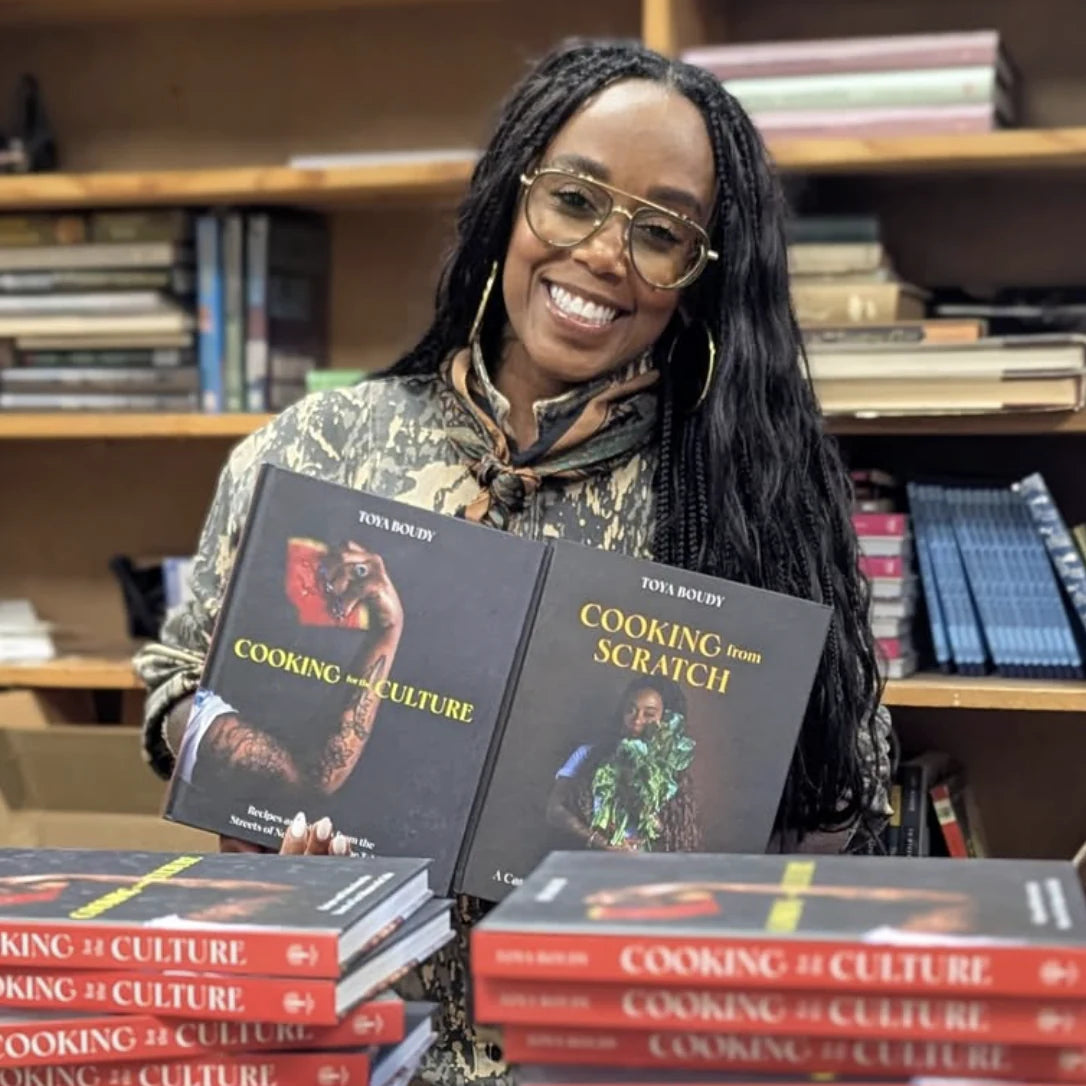
Toya Boudy holding her cookbooks

New Orleans-born chef, author, and television personality Toya Boudy celebrates her hometown’s food, history, and people while connecting generations through Southern culinary traditions.

She has written three cookbooks and appeared on the Today Show, Tamron Hall, Food Network, Hallmark Channel, and CBS Saturday Morning.

In 2026, Toya became the first woman to cook in Whitney Plantation’s historic enslaved people’s kitchen quarters, deepening her exploration of food and cultural memory.

As an ambassador and storyteller, Toya brings deep culinary knowledge and a passion for community to every table, honoring tradition and the people who carry it forward.

Bean Trail Sponsors

Louisiana’s modern rice industry took root on the southwest prairies in the 1880s, making Crowley the Rice Capital of the World. Cajun Country Rice comes from that same prairie and Falcon Rice Mill, the state’s last mill still owned by its founding family. The Falcons began cleaning rice for seed in 1942 and opened the mill in 1950. Today, the third generation produces several varieties, all grown, milled, and packaged in Louisiana — because without Louisiana rice, red beans are only half a plate.

“It started with seed.”

The Falcons were in the planting trade before the eating trade.

Visit Cajun Country Rice

For more than a century, Monday in New Orleans has meant red beans — and for generations, those beans have meant Camellia. The Hayward family entered the city’s food trade in the 1830s, and L.H. Hayward Jr. opened his wholesale house in 1923. His son Gordon later packaged beans for self-serve grocers and trademarked Camellia in 1947. Today, fourth-generation owner Vince Hayward processes red kidney beans and 18 other varieties near New Orleans. Growers still reserve their finest crop for the company’s Hayward Standard, making Camellia a trusted fixture in Southern kitchens.

Visit Camellia